
Finches
Notes from the Finch Room
I've been keeping finches for over twenty years — everything from native British species to Australians and Africans. It started with a pair of zebra finches and has since expanded considerably beyond what my partner considers reasonable.
This is what I've learnt.
Where It All Began
Why Finches? Let Me Try to Explain.
People who don't keep birds often assume finches are the entry-level option — small, cheap, easy, a stepping stone to something more impressive. That's almost exactly backwards. Finches are, in many ways, one of the most demanding and endlessly fascinating groups of birds you can keep. Get them right and you have a living, breathing slice of the natural world in your aviary. Get them wrong and you spend a lot of time wondering what went wrong.
The order Passeriformes — perching birds — contains over 6,000 species, and what we loosely call "finches" spans several distinct families: the Fringillidae (true finches, including British natives like the goldfinch and chaffinch), the Estrildidae (waxbills, grassfinches, and mannikins, including the wildly popular zebra finch), and the Ploceidae (weavers and wydahs). Each family has its own demands, its own character, its own particular way of making you feel simultaneously delighted and bewildered.
What draws most people in — including me — is colour and movement. A well-planted aviary with a mixed collection of active, vibrantly coloured finches is one of the most visually arresting things in aviculture. A cock Gouldian finch in full colour is, without any exaggeration, one of the most spectacular birds on earth. A male pin-tailed whydah in breeding plumage, with that extraordinary tail, is genuinely difficult to believe is real.
6,000+
PASSERINE SPECIES WORLDWIDE
5 – 12
YEARS TYPICAL LIFESPAN
9 – 25cm
LENGTH RANGE BY SPECIES
Species, Breeds, & What to Keep
Breeds, Types & Varieties
What follows isn't an exhaustive taxonomy — it's a personal account of the species I've kept, observed closely, or know well through other keepers in the British finch fancy. I've grouped them loosely by family, because the family distinctions genuinely matter for care and housing.
01
Zebra Finch -
Taeniopygia guttata
Estrildidae
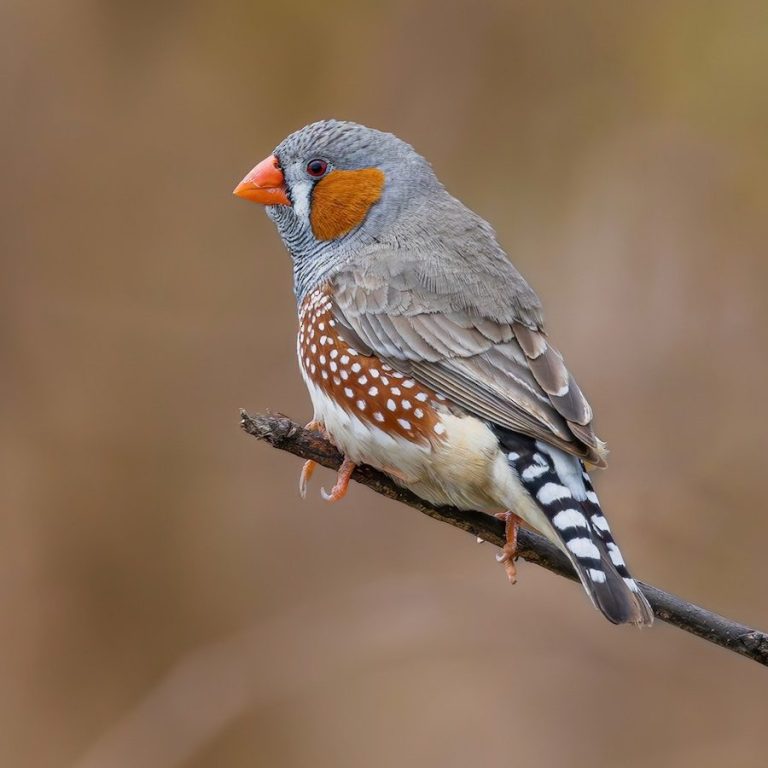
The gateway drug of finch keeping, and I mean that affectionately. Zebra finches are indestructible by finch standards — robust, prolific, endlessly active, and genuinely fascinating to observe. The wild type cock, with his orange cheek patches, black-and-white barring, and chestnut flanks, is a handsome little thing. Decades of selective breeding have produced an array of mutations: fawn, white, pied, crested, penguin, and many more. They're native to mainland Australia and parts of Indonesia, where they live in large, nomadic flocks following rainfall. In captivity, they breed readily to the point of requiring management — a pair in a well-equipped cage will attempt to breed constantly if you let them.
02
Gouldian Finch -
Chloebia gouldiae
Estrildidae
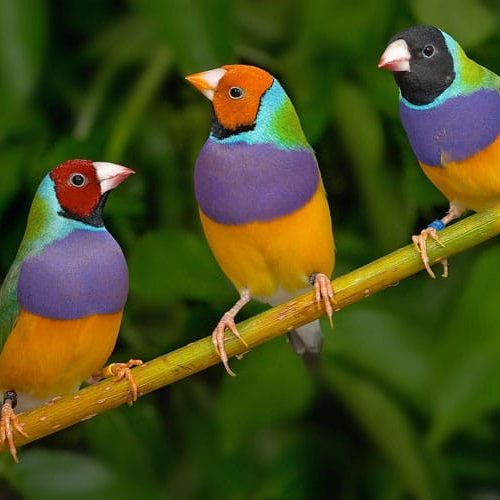
There is no bird in aviculture more visually extraordinary than a cock Gouldian in full breeding plumage — a mosaic of purple, yellow, green, black, and either red, black, or orange on the face, depending on the morph. John Gould described them in 1844 and named them after his wife; the name is entirely apt. In the wild they're found in tropical northern Australia, and that background matters enormously: they require warmth (never below 15°C; ideally above 20°C), a dry environment, and air-sac mite prevention as a standard part of the husbandry programme. They're classified as endangered in the wild. In captivity, they're well-established and bred in considerable numbers, with a range of colour mutations available — yellow-back, blue-back, and various face colour combinations.
03
Bengalese Finch -
Lonchura domestica
Estrildidae
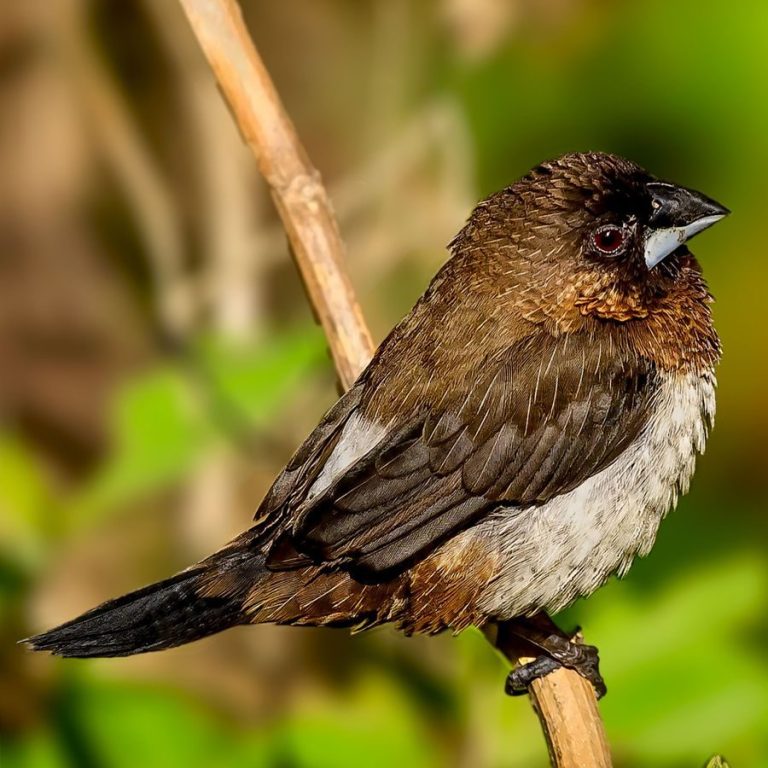
The Bengalese — also called the Society Finch, particularly in North America — is a fully domesticated species with no wild counterpart, developed in China and Japan from Lonchura striata stock several centuries ago. They come in chocolate, fawn, white, pied, and crested forms. Their great distinction is temperament: Bengalese are possibly the most reliably calm, gentle finches in aviculture, and they are exceptional foster parents. Many a Gouldian chick that its parents abandoned has been raised successfully by a pair of Bengalese. I keep a small group specifically for fostering duty, and they've saved entire clutches for me.
04
Common Waxbill -
Estrilda astrild
Estrildidae
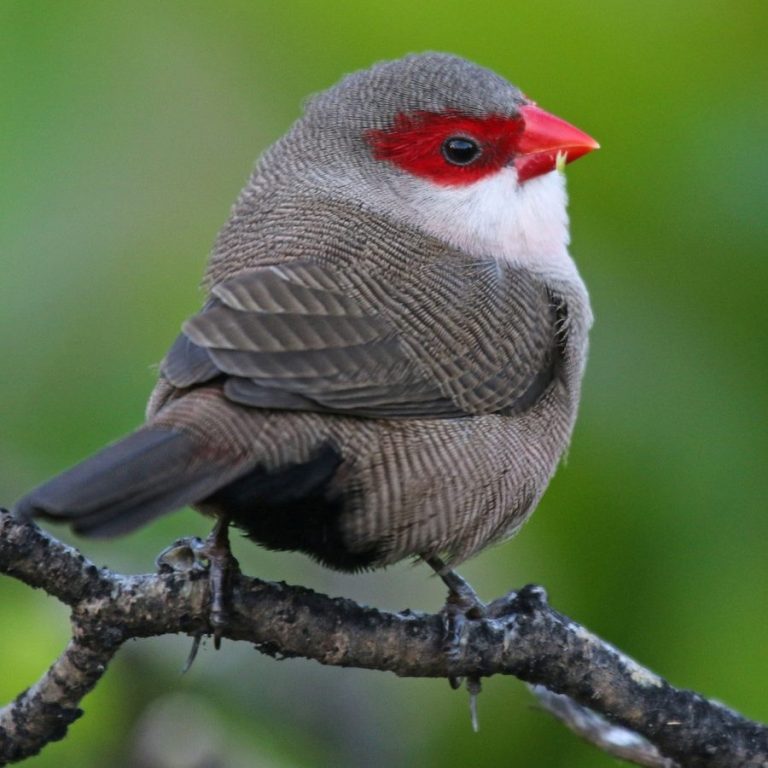
Waxbills are a large genus of small African estrildids, and the common waxbill is my favourite entry point into the group. Finely barred in grey-brown with a vivid red bill and eye-stripe, they're tiny — barely 11 cm — and endlessly active. They originate from sub-Saharan Africa and require warmth, particularly in the British winter: outdoor aviaries need heated shelters. Despite their small size, they're feisty and territorial with their own kind, so colony management requires attention. The closely related orange-cheeked waxbill and the St Helena waxbill are also worth investigating once you have the basics right.
05
Owl Finch -
Taeniopygia bichenovii
Estrildidae
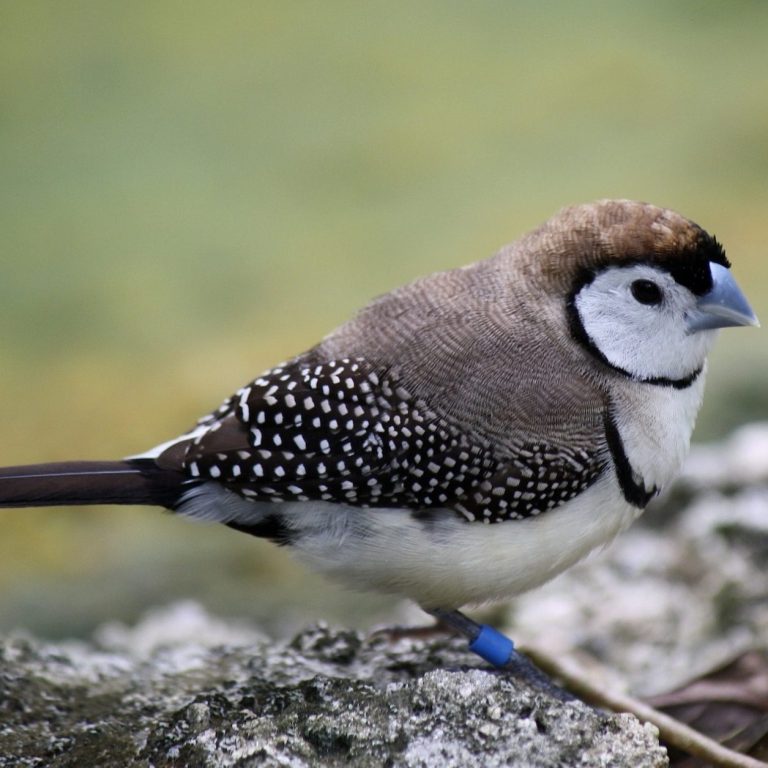
Named for the two parallel black bars across the chest and the round, owl-like face pattern, the double-bar or owl finch is an Australian grassfinch and one of the most reliably successful breeding species in a British aviary. They're gentle in a mixed collection, not particularly sensitive to temperature compared to Gouldians or waxbills, and they breed freely when comfortable. The white-rumped and black-rumped forms both occur, and there are established mutations in captivity. A quiet, understated bird that rewards the keeper who pays close attention — they communicate a great deal through subtle posture and movement if you know what to look for.
06
Red-faced Parrot Finch - Erythrura psittacea
Estrildidae
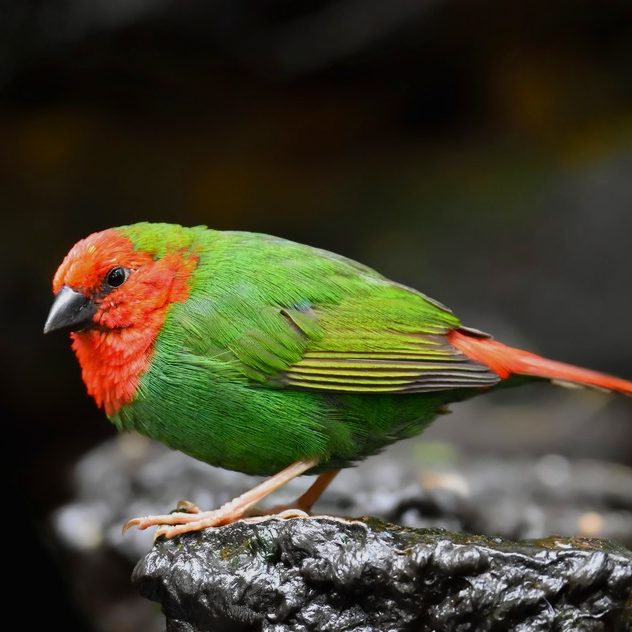
Of all the parrot finches, the red-faced is the one I'd most readily recommend to someone ready to step beyond the easy Australian grassfinches. Native to New Caledonia, it's a compact, electric bird — grass-green body, vivid scarlet face and rump — that looks almost implausibly tropical even in a British birdroom on a grey November morning. Cocks and hens are very similar in plumage, which makes sexing by sight unreliable; behavioural cues (cock song and display posture) are more dependable. They need warmth — I wouldn't take them below 14°C — and they appreciate a varied diet including germinated seed, green food, and live insects during the breeding season. Temperamentally they're not aggressive, but they're not as easy-going as zebras or Bengalese; a degree of respect for their space is warranted. They can be reluctant breeders in captivity and benefit enormously from a well-planted, spacious aviary rather than a cage environment.
07
Sea-green Parrot Finch -
Erythrura viridifacies
Estrildidae
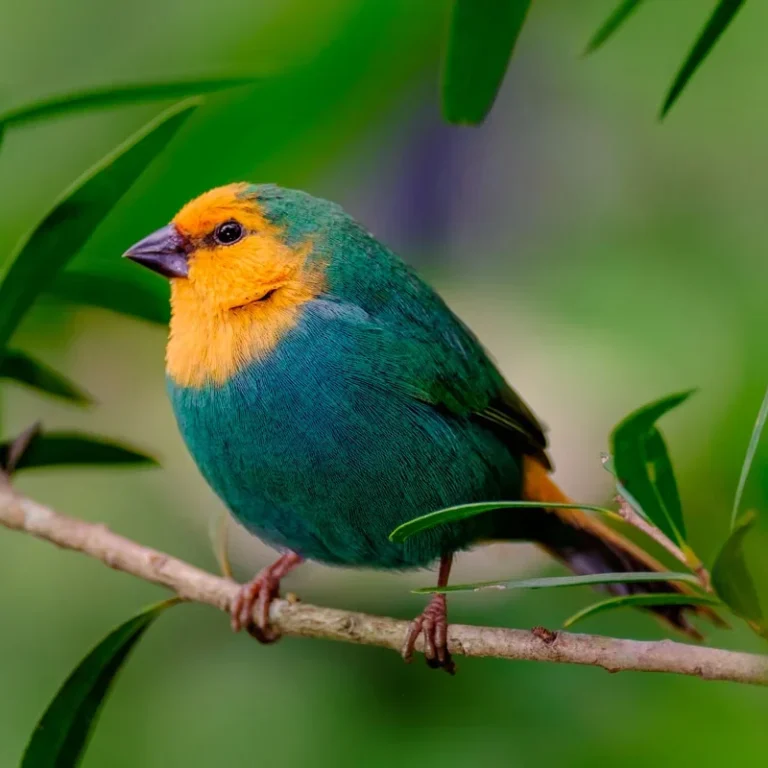
The sea-green parrot finch — sometimes called the green-faced parrot finch — is the rarest and most demanding of the parrot finches I've kept, and honest keepers say so plainly. It's a Philippine species, found in lowland grassland and forest edge, and in captivity it carries a reputation for being particular about conditions in a way that can genuinely try your patience. They require careful temperature management (no lower than 16°C in my experience), good air quality, and a settled environment — they're noticeably more unsettled by disturbance than related species. Availability in Britain is limited; finding genuinely good captive-bred stock from a knowledgeable breeder is the essential first step, and I'd say this species is not one to attempt without experience of the easier parrot finches first.
09
Long-tailed Grassfinch -
Poephila acuticauda
Estrildidae
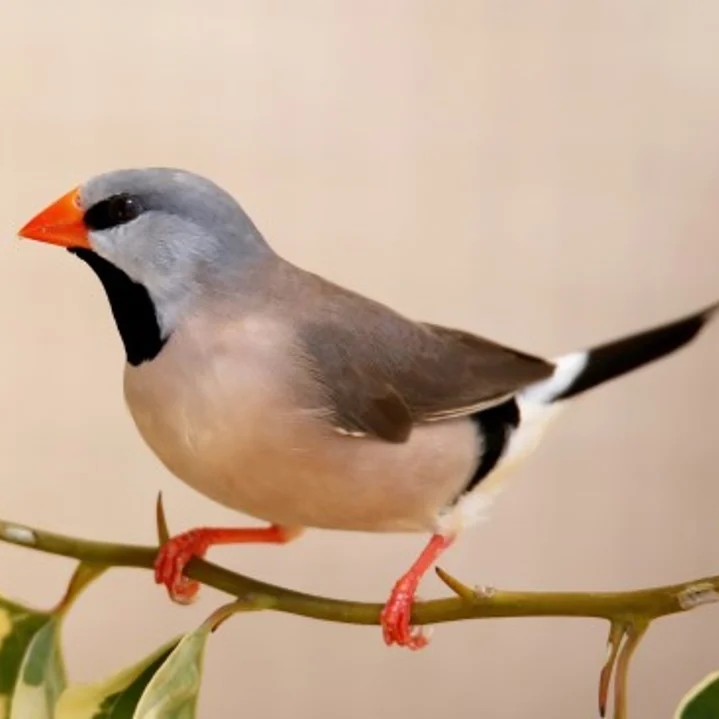
The long-tailed grassfinch — or long-tail, as it's almost universally called in the fancy — is one of the most distinctive Australian grassfinches in aviculture, with its elongated central tail feathers, clean grey and fawn plumage, black bib, and that striking yellow or red bill depending on subspecies. The yellow-billed form (P. a. acuticauda) from the Kimberley and Northern Territory and the red-billed form (P. a. hecki) from eastern Queensland are both established in British collections; some keepers specialise in keeping the forms pure, others are less concerned. In temperament they sit somewhere between the calm Parson's finch and the more active owl finch — generally peaceable in a mixed setting, confident without being dominant. They're moderately cold-sensitive and need frost-free conditions through winter, but they're not as demanding as Gouldians or parrot finches. Their characteristic long tails are worth protecting from cage damage — I've lost tail feathers to nest boxes with edges set too close to perches, which is an easy oversight to avoid once you've made the mistake once.
08
Parson's Finch -
Poephila cincta
Estrildidae
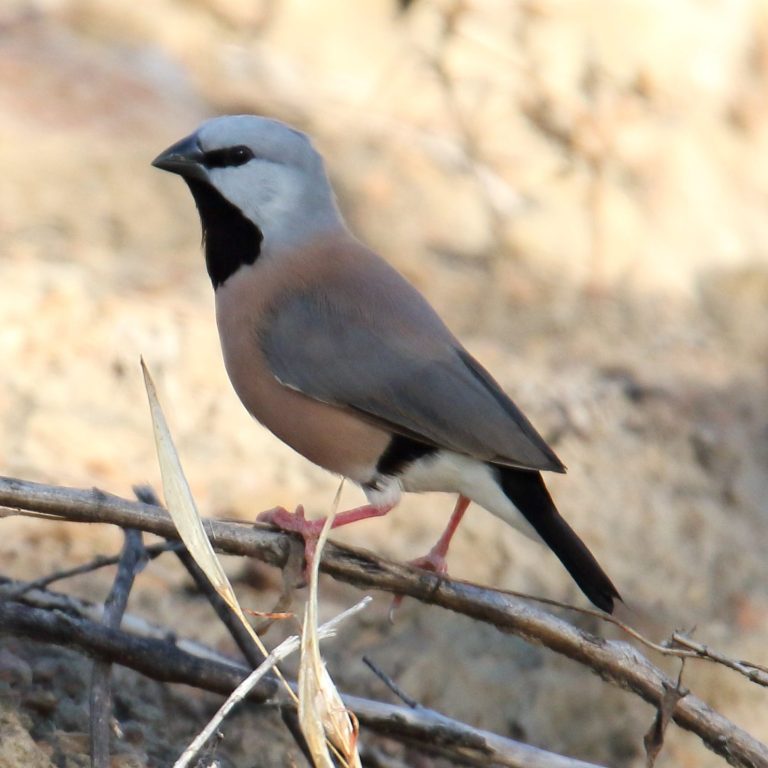
The Parson's finch is a close relative of the long-tailed finch and shares much of its quiet elegance — a grey-and-fawn body, black bib, pink-red bill, and the distinctive black tail coverts that give both species their "mask" quality. There are two subspecies: the black-rumped (P. c. cincta) from Queensland and New South Wales, and the white-rumped (P. c. atropygialis) from northern Queensland and parts of the Northern Territory; the rump colour is the reliable distinguishing feature. In the aviary, Parson's finches are genuinely good-natured birds — sociable with their own kind and untroubling in a mixed collection — and they breed reliably in a well-set-up enclosure. They're considerably hardier than Gouldians but I still bring them into a frost-free shelter through winter. Their song is a simple, pleasing series of soft notes that becomes a familiar background to the birdroom through the breeding season.
10
Star Finch -
Bathilda ruficauda
Estrildidae
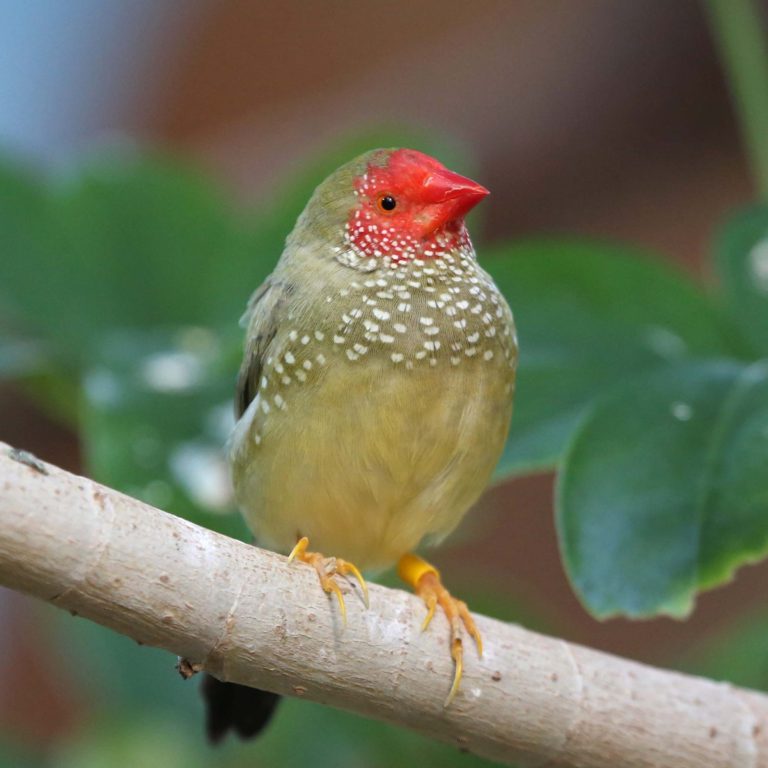
The star finch is one of those birds that stops you the first time you really look at one. The cock is olive-green above, yellow below, with a vivid red face and bill and the white spotting across the breast and flanks that gives the species its name. In good light — particularly sunlight — the spotting seems almost phosphorescent against the yellow. Native to northern and north-eastern Australia, they're grassland and wetland-edge birds in the wild, and that background is useful to keep in mind: they do best with access to fresh grass seed heads and water, and they're noticeably more active when their environment offers some structural interest at ground level. There are three subspecies, and the nominate (B. r. ruficauda) from Queensland is the most commonly kept in Britain. They're relatively hardy compared to Gouldians, but I still maintain a minimum temperature of 12°C for my star finches through winter — below that they become noticeably uncomfortable. Several colour mutations are now established in captivity, including yellow and fawn forms, though I keep only wild-types; the original is striking enough.
11
Cuban Finch -
Tiaris canora
Thraupidae
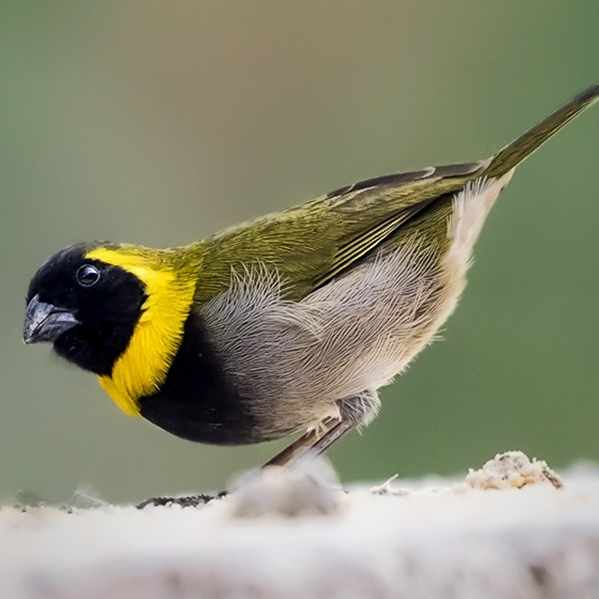
The Cuban finch is not especially common in British collections, which I think is partly a matter of availability and partly an unfair reputation for difficulty. They're not as straightforward as a zebra finch, but experienced keepers willing to take their specific requirements seriously find them thoroughly rewarding. The key demands: temperature no lower than 14°C (I keep mine at a minimum of 16°C through winter), good humidity — a persistently dry environment affects condition noticeably — and a diet broader than straight seed. They take well to germinated seed, soft food, small amounts of fruit, and live food during breeding, which is when protein intake becomes important. Critically, cocks can be aggressive, particularly toward other males and toward similarly sized or coloured birds. In a mixed aviary, careful management of visual barriers and space is essential; I've had a Cuban cock disrupt an otherwise settled mixed collection entirely when his breeding instincts were at their peak.
Who Gets Along With Whom
Mixed Collections
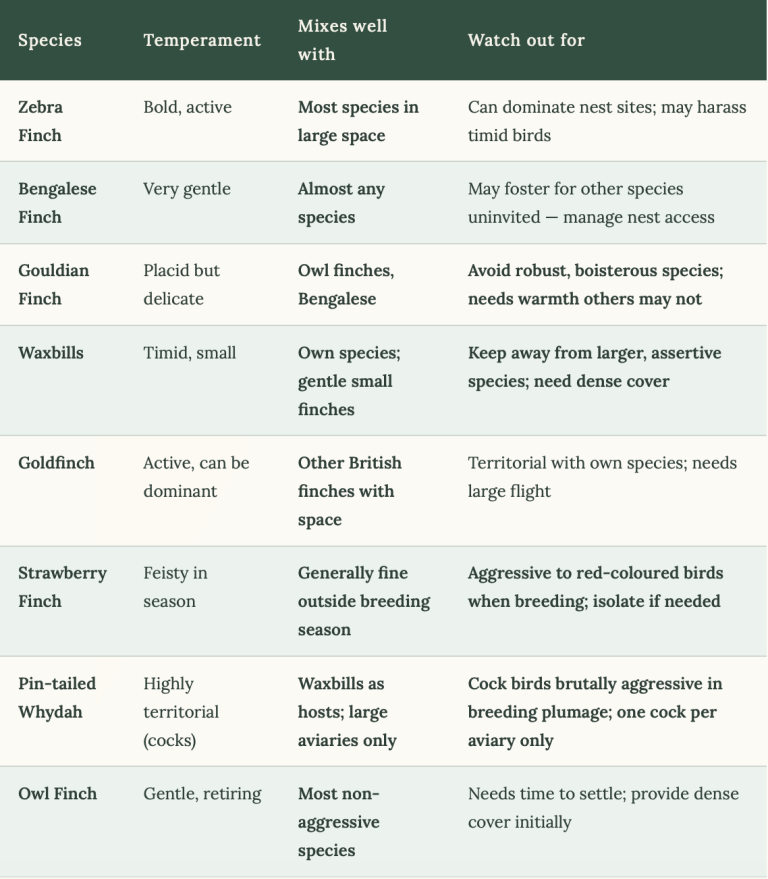
One of the great pleasures — and pitfalls — of finch keeping is the mixed aviary. The appeal is obvious: a diverse, colourful collection of species interacting naturally, each occupying its own niche. The reality requires careful thought about size, temperament, dietary needs, and territorial behaviour. Many combinations that work beautifully on paper fall apart in practice.
The broad principle I've arrived at is this: the smaller and more timid the species, the more space and cover they need relative to their body size. A waxbill being harried by a more assertive finch at the food station will be in poor condition within weeks. Density of planting in the aviary — real structural complexity — solves problems that no amount of cage management can.
Song, Display, & What the Birds Are Saying
Vocalisation & Behaviour
Finch vocalisations are a world unto themselves, and learning to read them is one of the most rewarding aspects of keeping these birds. The calls of estrildid finches — short, contact calls, alarm notes, the begging calls of hungry chicks — are largely instinctive. The songs of fringillid finches, particularly British natives like the goldfinch, chaffinch, and bullfinch, are partly learnt, with regional dialects observed in wild populations.
The zebra finch has been one of the most intensively studied birds in behavioural science precisely because its song learning is a useful model for understanding how complex motor skills are acquired. Young male zebras learn their song by imprinting on their father or a tutor male, producing a "babbling" subsong before gradually crystallising it into the adult version over several months. This process has real parallels with human language acquisition, which is part of why zebra finches have featured in thousands of neuroscience papers.
Courtship displays vary enormously between species. The zebra finch cock bobs up and down whilst singing to the hen, holding a piece of grass or nesting material to demonstrate his domestic ambitions. Gouldian finches perform a rather elegant side-to-side head-bobbing display, the male fluffing his breast feathers to show their full depth of colour. Learning to recognise successful pair bonding — mutual preening, a hen adopting a soliciting posture — saves you considerable time in the breeding room.
Alarm calls are worth learning species by species. In a mixed aviary, a sudden silent freeze of all birds means something — a sparrowhawk shadow, an unexpected movement. I've occasionally used the alarm response of a particularly vigilant zebra cock as a useful early warning that something was disturbing the outdoor section before I could see it myself.
How I Keep My Birds Well
Husbandry
Finch care is more varied than canary care precisely because the group spans such different origins — Australian grassfinches, African waxbills, and British native fringillids all have genuinely different requirements. What follows are the principles I've found to hold across most of the species I keep; I flag where specific species diverge.
🌡 Temperature
This is the most critical variable for tropical species. Gouldians must never go below 15°C; waxbills struggle below 12°C. British natives can tolerate frost if sheltered and well-fed, but I use a heater for non-native species from October. I use a minimum-maximum thermometer in every section of my aviaries and check it daily through autumn and winter.
🏠 Housing
Finches need horizontal flight distance. The minimum I'd consider for a breeding pair of most small estrildids is a cage 90 cm long; ideally much more. For British natives, a purpose-built outdoor aviary is strongly preferable to any cage arrangement. My outdoor aviaries are planted with grasses, shrubs, and trees — the structural complexity reduces stress and territorial conflict far more effectively than perch arrangement alone.
Estrildids are predominantly grass-seed eaters; a good foreign finch mix supplemented with millet spray, seeding grasses, and greens forms the core. Fringillids (goldfinches, bullfinches) eat a wider range including seeds, buds, and berries — I provide soaked seed, seasonal wild food, and niger seed throughout. Live food (small mealworms, waxworms) is essential during breeding and moult for most species.
🌾 Diet
🥚 Breeding Season
I use closed nest boxes for most estrildids. Nest inspection should be minimal and at consistent, predictable times — erratic disturbance causes abandonment far more often than careful, regular checks. I keep a breeding register for every pair: date eggs laid, clutch size, hatch date, fledge date, ring numbers. Without records, you're essentially starting from zero each season.
🐛 Live Food
The single most commonly neglected aspect of finch keeping, in my experience. Almost every estrildid finch needs live food when rearing chicks — without it, abandonment or failure to thrive in fledglings is the likely outcome. I regularly purchase small mealworms. It's a modest amount of work that makes a disproportionate difference to breeding success.
🩺 Health
Air-sac mites (Sternostoma tracheacolum) are the primary health concern in Gouldians and some other Australian species — treat preventatively with ivermectin before the breeding season. Coccidiosis is a risk in outdoor aviaries, particularly in wet conditions; good hygiene and avoidance of ground feeding helps significantly. All new birds are quarantined for 30 days minimum. I have an avian vet I can call on same-day for urgent cases — essential, not optional.