
Canaries
Everything I Know About Canaries
I've kept canaries for the better part of twenty years. What started with a single Yorkshire cock bird — purchased at a local show — has grown into a proper aviary and an obsession I wouldn't trade for anything.
This page collects what I've learnt, firsthand and from the wonderful community of breeders and fanciers I've been lucky enough to know.
Where It All Began
ORIGINS & WILD RELATIVES
Before I talk breeds and birdrooms, it's worth understanding where canaries actually come from — because it explains an awful lot about how they behave and what they need. The domestic canary (Serinus canaria forma domestica) descends from the wild Atlantic canary, a bird native to the Macaronesian islands: the Canary Islands, Madeira, and the Azores. If you ever get the chance to hear a wild canary on Tenerife, take it. It's a revelation — rougher and more variable than the polished song of a show Roller, but electrifyingly alive!
The wild birds live in open woodland, orchards, and scrubby hillsides. They're active, social, and surprisingly robust. This matters enormously when you're keeping domestics, because many of the problems I see in poorly kept canaries — feather plucking, incessant pacing, loss of song — are the result of housing that ignores this fundamental nature. A canary that can't fly, forage mentally, or hear and see other birds is a canary under stress, full stop.
Spanish sailors brought birds to Europe in the late 15th century. The Spanish crown initially kept a tight monopoly on live stock, exporting only cocks so that no one else could breed from them. It wasn't until some birds escaped — or were smuggled out — to Italy that canary breeding spread across the continent. Within a century they were everywhere, and the extraordinary diversity we enjoy today began to take shape.
12 - 17
Years lifespan when well kept
11 - 17cm
Length by variety
~ 20
Recognised colour types
Species, Breeds, & What to Keep
Breeds, Types & Varieties
One of the first things to get straight in your head is that "canary" is not a single thing. There's one species — Serinus canaria — but centuries of selective breeding have produced dozens of distinct varieties, grouped broadly into three categories: song canaries (bred for vocal quality), colour canaries (bred for plumage), and type canaries(bred for conformation and shape). Each has its devotees, its shows, its arcane standards, and its particular joys and frustrations.
Below are the varieties I know best, either from keeping them myself or from close acquaintance with breeders in the fancy.
01
Wild Atlantic Canary -
Serinus canaria (Wild Species)
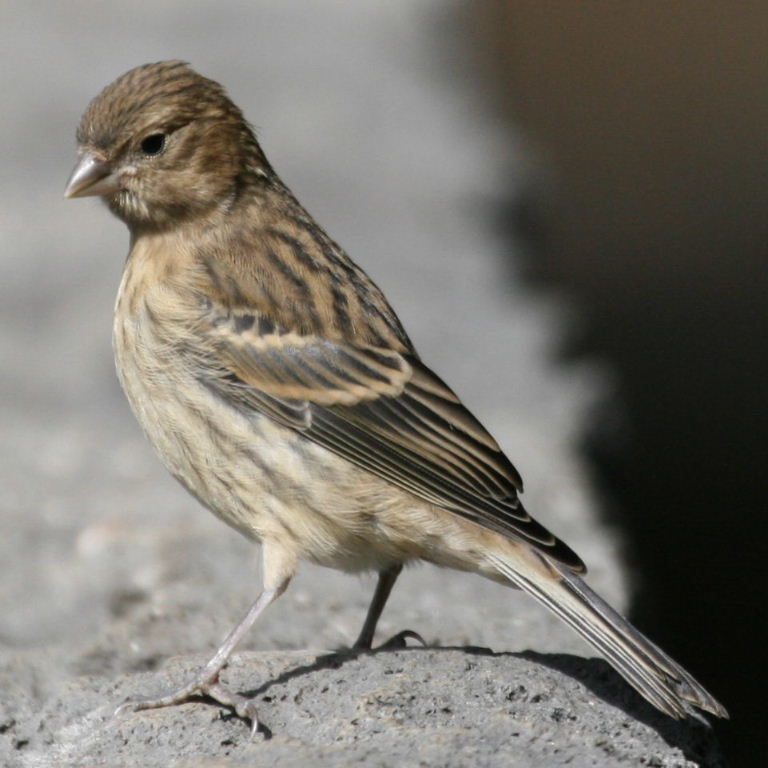
The ancestor of the lot. Predominantly greenish-yellow with streaked upperparts, it's considerably less vivid than most domestics but beautiful in its own right. I've never kept wilds — nor would I — but understanding them is essential. The male's song is a complex, free-flowing affair, quite different from the structured tours of a show Roller. Studying recordings gives you real insight into what five centuries of selective breeding has preserved, and what it has transformed entirely.
02
Roller Canary -
Harz Roller / German Roller
(Song canary)
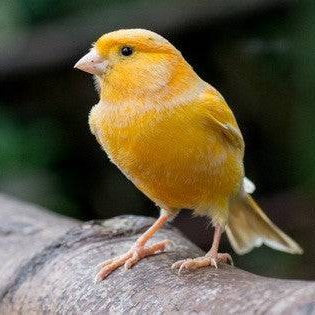
The Roller is what most people picture when they imagine a "proper" song canary. Bred in the Harz Mountains of Germany from the 17th century, these birds sing with beak nearly closed, producing a soft, flowing melody completely unlike the open-beak brilliance of a type canary in good condition. Roller singing is judged on specific named passages — hollow rolls, bass rolls, glucke, water glucke, bell roll, schockel — and competitions are taken very seriously indeed, particularly in Germany where meticulous breeding records span generations.
03
Spanish Timbrado -
Serinus canaria (domestic)
(Song Canary)
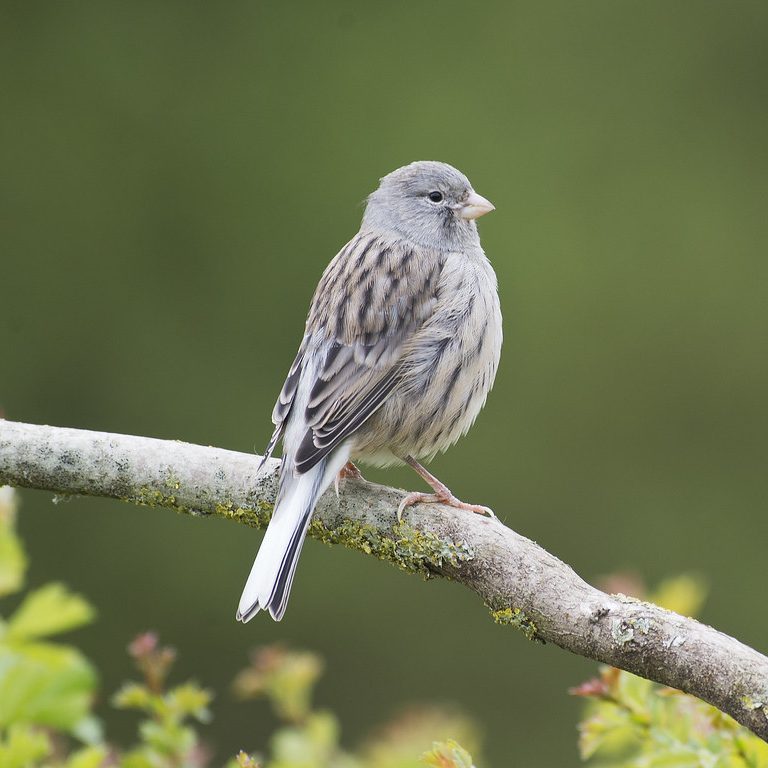
If the Roller is a chamber quartet, the Timbrado is flamenco. Developed in Spain, these birds sing with a metallic, bell-like clarity — bright, rapid, and full of fire. The song retains much of the wild canary's spontaneity, which is exactly what Spanish breeders value. Timbrados are judged on the metallic quality of their tours, their speed, and their continuity.
04
Waterslager (Malinois) -
Belgian Waterslager
(Song Canary)
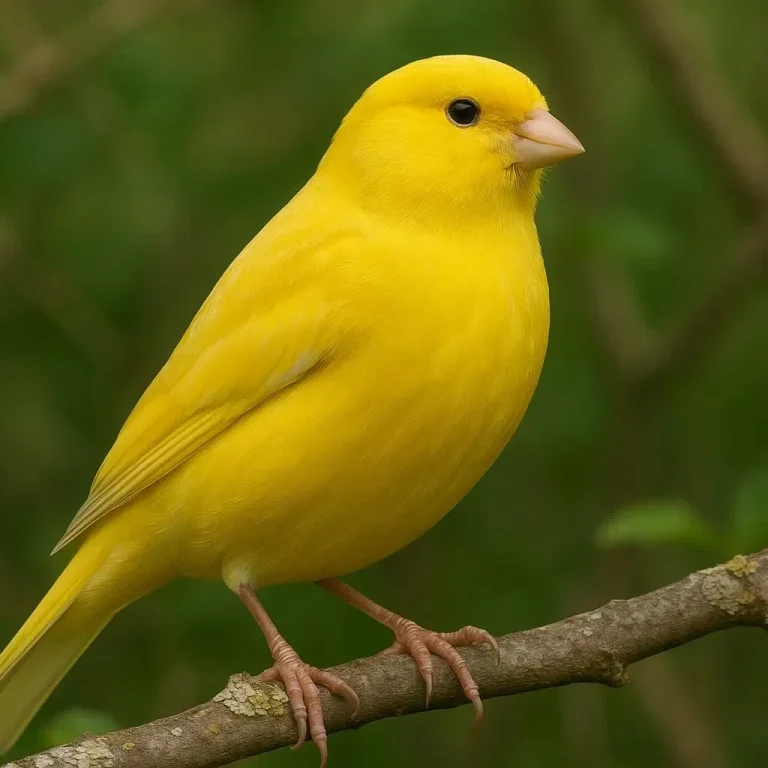
Originating in Belgium, the Waterslager has been bred to produce a liquid, bubbling song that genuinely sounds like running water. The water tour, bell tour, and flute tour are its signature passages. These birds have a reputation for being a little more demanding than Rollers — they need careful management of their auditory environment during the tutor period, as they'll readily pick up bad habits. When you hear a truly exceptional Waterslager in full voice, though, it's genuinely staggering.
05
Red Factor Canary -
Hybrid — Serinus × Spinus cucullatus
(Colour Canary)
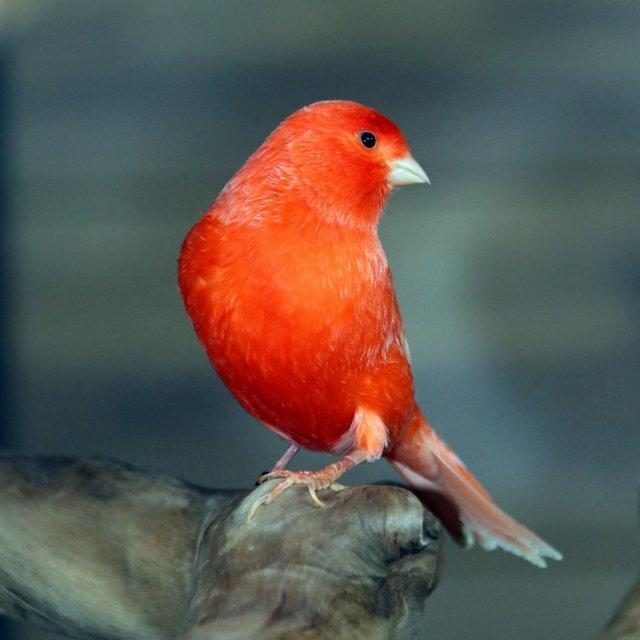
In the 1920s, German aviculturist Dr Hans Duncker crossed the canary with the Red Siskin (Spinus cucullatus) from Venezuela, introducing red pigmentation that simply didn't exist in the canary genome. The resulting birds — and their many generations of descendants — express everything from deep orange to vivid scarlet, depending on genetics and diet. The colour requires carotenoid supplementation (typically canthaxanthin or beta-carotene-rich foods) to be fully expressed; without it, the bird moults out to a disappointing pale orange. Colour canary showing is its own world of genetics, feather type assessment, and intense competition.
06
Yorkshire Canary -
English Type Canary
(Type Canary)
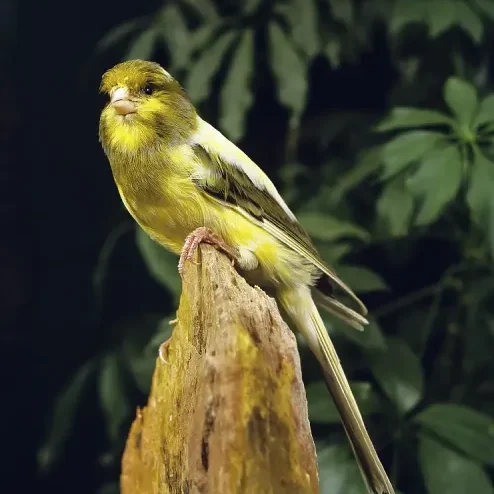
This is the breed that started me off, and I still keep Yorkshires today. Developed in Yorkshire during the 19th century, it's known as the "Guardsman" for its tall, slender, upright stance — it can reach nearly 17 cm. The posture is everything: back tight and straight, head held high, the bird standing proudly on the show perch as though it knows it's being judged. Plumage should be smooth and close-fitting, with no looseness whatsoever.
07
Gloster Canary -
English Type Canary
(Type Canary)
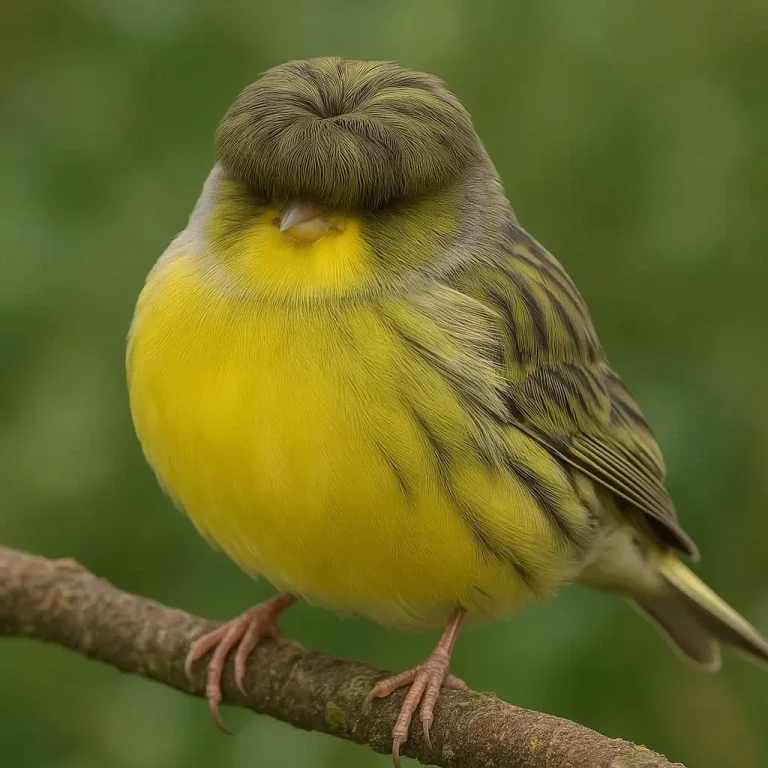
One of the most immediately recognisable canaries, and arguably the most popular exhibition type in Britain today. Developed in Gloucestershire in the 1920s by Mrs Rogerson, the Gloster comes in two forms: the Corona (crested) and the Consort(plain-headed). Breeding requires pairing Corona to Consort only — never Corona to Corona, as two copies of the crest gene is lethal. For a newcomer to type breeding, Glosters are a brilliant entry point: sturdy, good-tempered, they breed readily, and the standards are clearly defined and well-supported by the Gloster Breeders' Association.
On the Matter of Song
Vocalisation
Even if you keep type canaries — and I do — song matters. An aviary full of singing cocks in late winter, as the days begin to lengthen and breeding season approaches, is one of the genuine daily pleasures of this hobby. There is simply nothing quite like it.
Only males sing, generally speaking (hens occasionally produce a quiet, broken warble, but nothing to write home about). The song is produced by the syrinx, a dual-chambered organ at the base of the trachea that allows birds to produce two independent sounds simultaneously — which is why canary song achieves a complexity no human voice could match.
Young males learn their song during a sensitive period in the first year, combining genetic inheritance with what they hear around them. This is why serious song breeders are meticulous about "tutors" — the birds young cocks can hear during this formative window. A well-tutored Roller should never hear a Timbrado; an aspiring Waterslager should not be exposed to Rollers. The wrong tutor can ruin an entire season's work.
For those of us keeping type canaries primarily for the show bench, the pressure is less acute. But I do pay attention to which cocks I house in adjacent cages — good, free song from a confident cock bird encourages the whole aviary.
Moult silences everything. Around July or August, as the days shorten, the cocks drop their song and begin replacing their feathers. The aviary goes quiet for six to eight weeks. I find this period strangely melancholy every single year — and every single year, when the first cock starts up again in early autumn, it feels like a small miracle.
How I Keep My Birds Well
Husbandry
I've made most of the mistakes in canary keeping over the years, often expensively. What follows is genuinely hard-won: approaches that work for me after considerable trial and error. Take all of it as a starting point, not gospel — experienced keepers vary considerably in their methods, and what works brilliantly in one aviary can be a disaster in another.
🏠 Housing
Space matters enormously.
My breeding cages are 80 cm × 60 cm minimum per pair; my flight area is considerably larger. Canaries need horizontal length for flight — height is far less important than many new keepers assume. I use a purpose-built aviaru now. Bar spacing should be no wider than 1.2 cm.
Keep birds well away from kitchen fumes absolutely — PTFE in overheated non-stick cookware releases gases that will kill a canary in minutes.
🌾 Diet
A good mixed canary seed forms the foundation, but it shouldn't be the whole diet.
I feed softfood (egg food) twice a week year-round, daily during breeding season and moult. Fresh greens whenever possible — Brocolli is a firm favourite, as are spinach, kale, and dandelion. Cuttlebone always available. I'm cautious about supplements: most commercial mixes provide a reasonable baseline, but targeted supplementation around moult and breeding makes a real and visible difference.
💧 Water & Bathing
Fresh water every single day — no exceptions, no matter how busy I am.
I use a water steriliser in summer when bacterial growth is faster. Bathing is not optional; it's essential for feather condition and mental wellbeing. A shallow dish of tepid water offered several mornings per week. During the moult particularly, regular bathing helps new feathers come through cleanly. I have one hen who will hurl herself at the bath drinker if I'm late — she makes her views perfectly clear.
🩺 Health
The golden rule: a sick canary deteriorates fast. Don't wait and see.
A bird sitting fluffed on the cage bottom, off its food, or showing nasal discharge needs warmth (32°C) and an avian vet same day if possible. Common issues I've encountered: air-sac mites (diagnosed by a clicking breath — treat immediately with ivermectin), E. coli infection in chicks, egg binding in hens (calcium, warmth, vet promptly), and French moult. Build a relationship with an avian vet before you urgently need one.
☀️ Moult
The annual moult is the most physiologically demanding period of the canary's year.
I increase protein throughout — extra egg food, insectivorous soft food — and use a good feather supplement. Minimal disturbance: no unnecessary handling, no show birds moved, no new introductions. I keep the aviary a touch cooler and well-ventilated during moult, which in my experience encourages a cleaner, faster completion of feather replacement. A clean moult sets the bird up for the entire following season.
🥚 Breeding Season
Breeding is triggered by increasing day length and temperature — I use a light timer from January to extend the photoperiod gradually.
Hens must be fit and in full feather before pairing; breeding an unfit hen is asking for trouble. I watch nest construction carefully: a hen who builds a slipshod nest is often one who'll abandon it. Average clutch is four eggs; incubation takes 13–14 days. I keep a written breeding record for every pair — indispensable over time.